How Narrative Becomes History
Use ClioVis to uncover patterns and tell stories grounded in data.
This case study, adapted from a PhD dissertation on Venezuela’s oil industry, shows how ClioVis helps researchers map, connect, and analyze historical narratives using literary texts and author backgrounds.
Literature Meets Data Visualization
In the 1920s and 30s, Venezuelan authors wrote stories that helped shape how the country viewed foreign oil companies—stories of exploitation, environmental harm, and worker abuse. These novels didn’t just entertain; they influenced public opinion and political action for decades.
With ClioVis, these literary perspectives come to life through interactive timelines that organize and link:
- Novel titles and themes
- Author backgrounds
- Historical events and political regimes
Bringing Research Questions to Life
Why were these stories so influential?
ClioVis helps answer this question by letting you categorize and connect data. In this example:
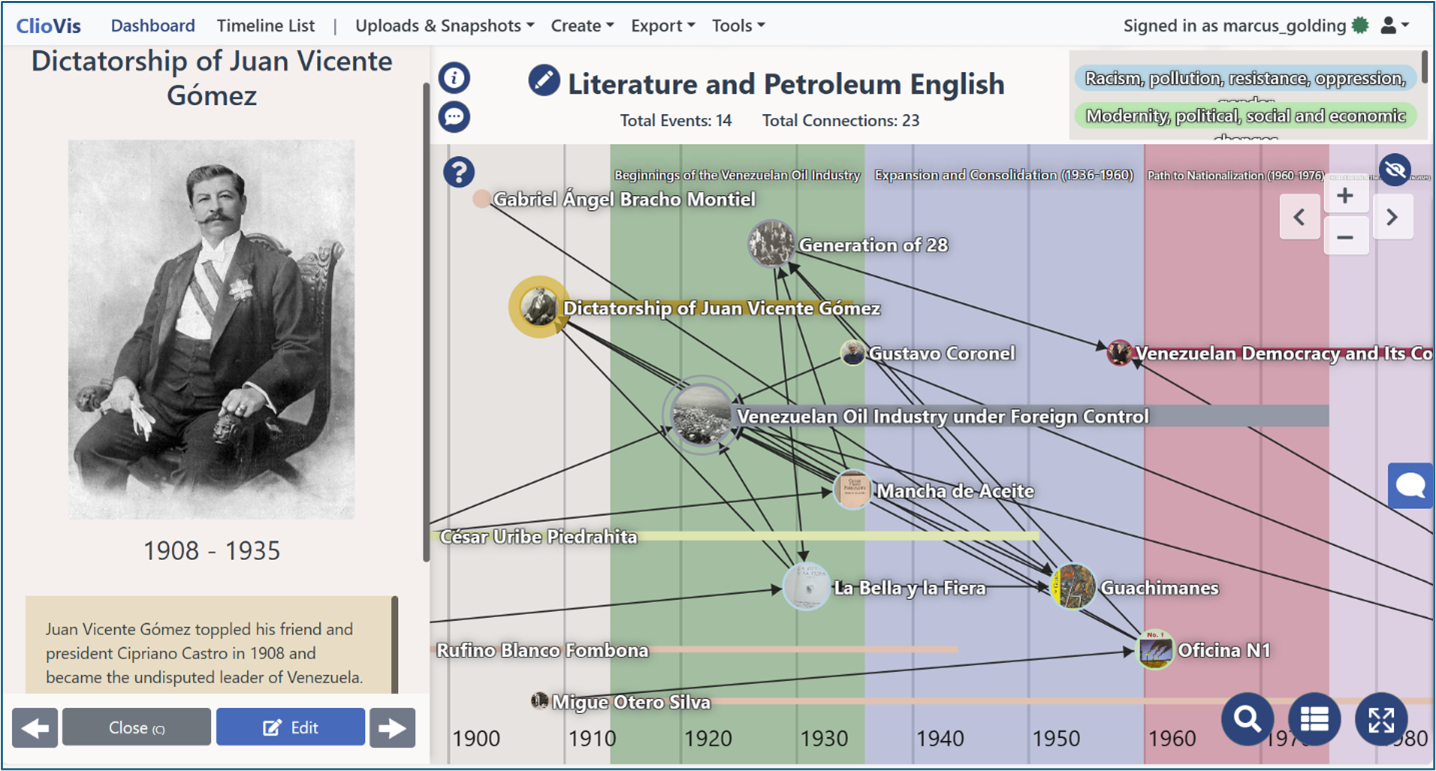
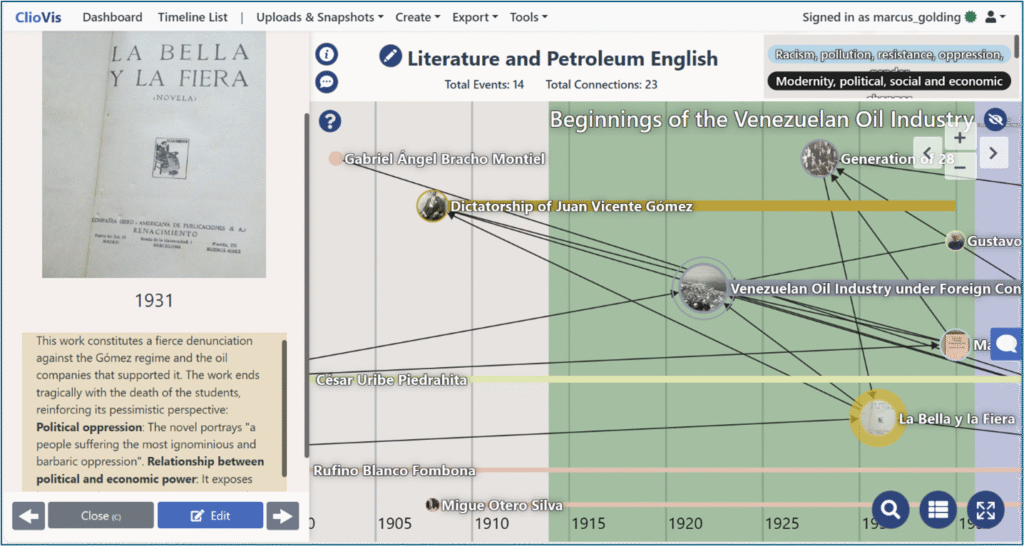
- Nodes show how each novel relates to events like the dictatorship of Juan Vicente Gómez (1908-1935)
- Labels reveal trends—most authors focused on themes of repression, racism, and environmental damage
- Toggle features let you switch between themes and author professions
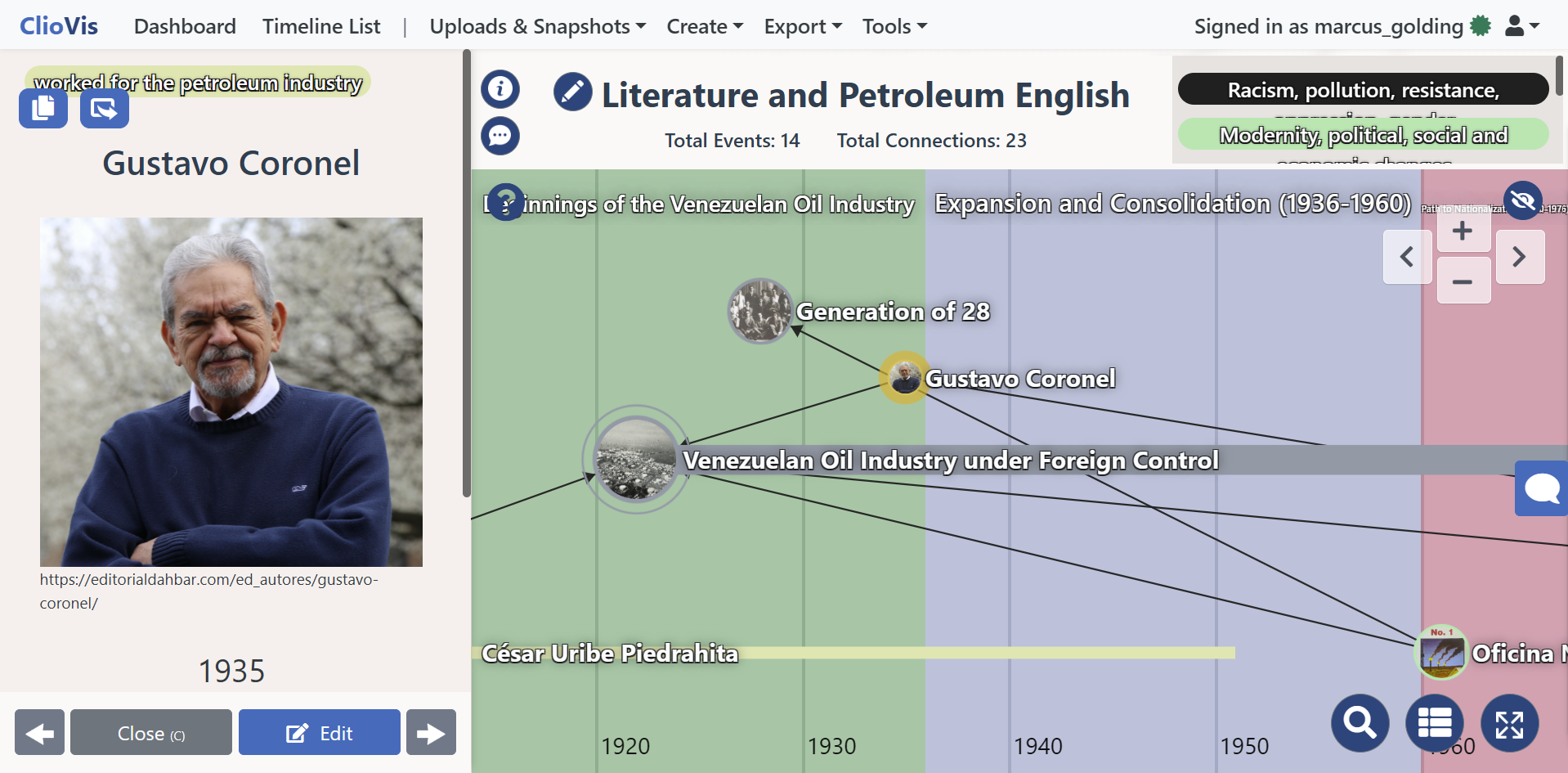
- Only two of the five novels depicted foreign oil positively. What sets them apart? Their authors worked in the industry—and one of them lived in a different political moment.
Context Matters: Authors & Eras
Four of the five authors lived through the oil industry’s chaotic beginnings—and most were political activists, even joining Venezuela’s Communist Party. Their views were shaped by dictatorship, inequality, and first-hand struggles.
In contrast, Gustavo Coronel, born in 1935 and a career engineer, saw a more reformed industry. His novel speaks of progress—of schools, jobs, and rising living standards, thanks to foreign investment.
Reveal the Hidden Patterns
ClioVis makes it easy to:
- Compare conflicting narratives
- Spot turning points and ideological shifts
- Link texts to broader political, social, and economic transformations
- Through visual structure and layered information, researchers can track how perception evolves across time.
What This Case Teaches Us
“ClioVis helped me turn literary analysis into a structured historical argument about the discursive nuances of foreign capital in the Venezuelan petroleum industry.”
By mapping five novels against their historical backdrops, this project shows how narrative power emerged from context:
- Negative portrayals came from authors living through the early exploitative phase
- Positive portrayals came later, shaped by reform and firsthand industry experience
- ClioVis made this argument visible—timelines clarified where, when, and why these perspectives formed.
Conclusion: Stories, Structures, and Historical Insight
ClioVis empowers researchers to turn complex narratives into clear, visual arguments. By organizing literature, biography, and history into interactive timelines, you can reveal how context shapes meaning—and how competing stories evolve over time.
This case study on Venezuela’s oil narrative shows the power of digital humanities: when we map our sources, we see patterns, uncover tensions, and deepen our understanding of the past.
ClioVis doesn’t just help you present your research—it helps you see it differently.
Try It Yourself
Whether you are analyzing novels, political movements, or cultural shifts, ClioVis gives you the tools to visualize complex ideas and share them with clarity.